Key takeaways
- Best value: Lodge 6 Qt enameled produces identical bread and braises to Le Creuset. Eight-year pot, one-year warranty, enamel chips easier, cream interior stains. Our top pick.
- Best for sourdough: Lodge Combo Cooker — 3.2 qt pot + 10.25” skillet lid, flip to bake. The standard choice for 500–750 g loaves.
- Under $100: Tramontina, Basics, Combo, Lodge — all work. Tramontina maxes at 450°F, a real limit for bread bakers.
- Le Creuset verdict: Le Creuset runs about 5x the Lodge for ~15% performance gain. Buy Lodge first; earn the Le Creuset after eight years if you still want it.
- Size matters: 6 qt is the family default. 5.5 qt works; 3.2 qt (Combo) is bread-only; 7 qt feeds 6+.
- Material safety: Enamel is glass, no iron leach, no PTFE. Bare cast iron adds dietary iron; ceramic non-stick (Caraway) is PTFE-free but wears in years, not decades.
What a dutch oven actually does
Mass, an oven-safe tight lid, and moisture cycling — the three things that set a dutch oven apart.
Why it works
- Cast iron mass (3–5x heavier than a regular pot) holds heat evenly
- Tight lid traps dough’s own steam for the first 20 minutes (oven spring + crust)
- Moisture cycles: steam condenses, falls back, braising happens below 212°F
- A regular pot scorches where a dutch oven braises
Before you buy
- Enamel chipping: cosmetic, still safe to cook on
- Interior staining: from tomato & turmeric; cream interior shows it more
- Oven temp: Tramontina is 450°F max (real limit for bread); others 500°F
- Warranty: Lodge 1 year; Le Creuset lifetime; Staub/Basics 1 year
How to choose, in order
Six steps to pick the right pot for your cooking.
Choose a dutch oven the way you choose shoes: size first, material second, lid fit third, weight you can actually lift fourth, budget fifth, color last.
- Size: 6 qt is default — Serves 3–4; feeds a family of 4–5 for stew. 5.5 qt works. 3.2 qt is bread-only. 7 qt is 6+ people & batch cooking.
- Material: enameled first — No seasoning, no iron leach, no PTFE. Bare cast iron needs upkeep. Ceramic non-stick (Caraway) is lightweight but wears in years.
- Lid fit matters — Tight lid traps steam. A loose lid braising is just a pot. Test it in person if you can; reviews note tight vs loose.
- Weight you can lift — Lodge/Basics ~8.5 lb empty; Caraway ~5 lb (half the weight). Full of stew, add 10–15 lb. Can you get it out of the oven?
- Budget tier — Tramontina (450°F limit), Basics, Lodge (our pick), Le Creuset. Each tier trades durability for price.
- Color last — Cream interior (Lodge, Le Creuset, Basics) shows your fond. Matte black (Staub) hides stains, browns better. Pick what you’ll use for years.
Once you pick, read the care guide. Don’t preheat enamel empty, don’t thermal shock it, hand-wash if you want decades. Any heavy oven-safe pot with a tight lid works — but the budget tier buys the real thing.
How the purchase works
Pick your pot from below
All ten are ranked by our tests, price, and use case.
Check availability & price
The widget shows today’s price; affiliates support this site.
Add to cart from Amazon
You get the same price; we get a small commission.
Arrive & cook
The pot lasts 8+ years if you don’t drop the lid. Enamel chips don’t matter.
The 10 best dutch oven pots in one ranking
From the budget Tramontina to the premium Le Creuset — the complete list, ranked by use, price, and honest trade-offs. Click any product to check today’s price and buy.
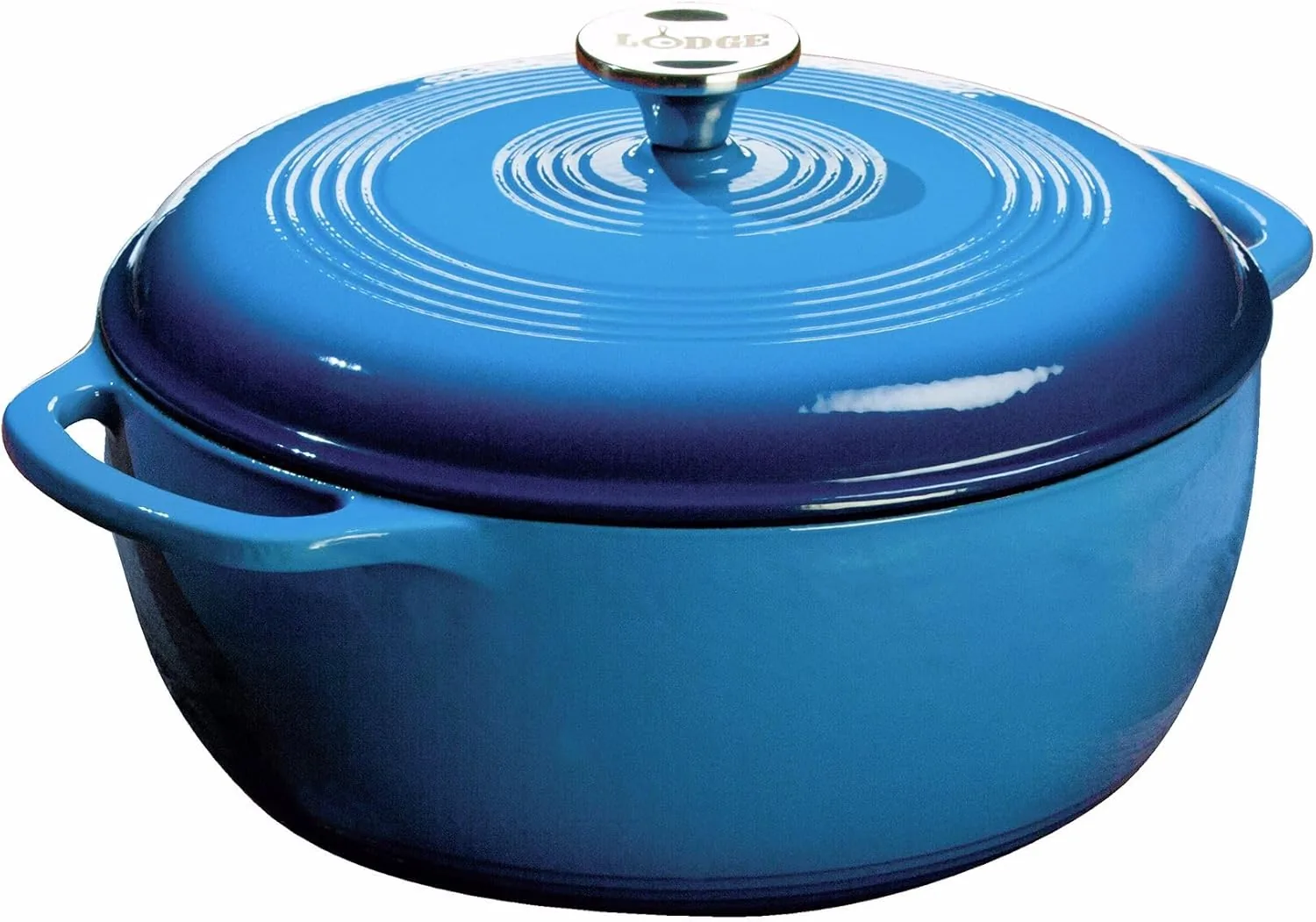 Best value
Lodge Essential Enamel Cast Iron Dutch Oven, 6 Qt
The value pick. Identical bread and braises to Le Creuset at one-fifth the price; enamel chips easier and the cream interior stains, but both are cosmetic.
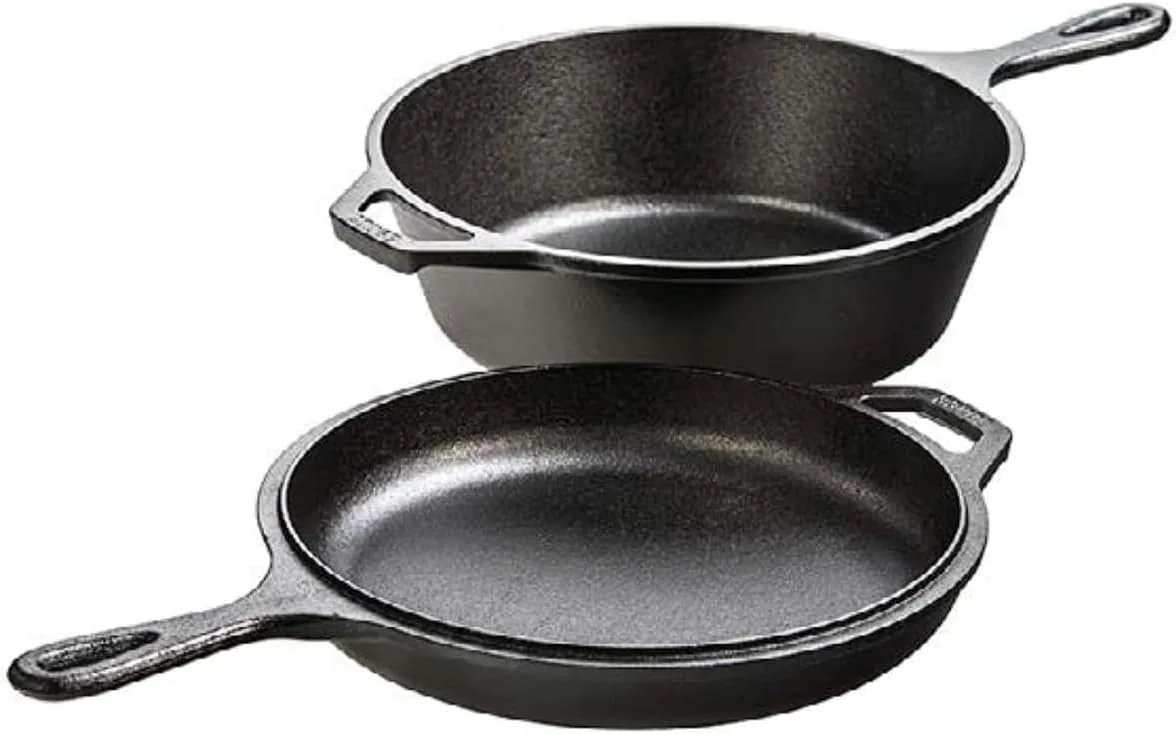 Sourdough king
Lodge Cast Iron Combo Cooker, 3.2 Qt (Pot + Skillet Lid)
The sourdough pick. 3.2 qt pot plus a skillet lid you flip — load the dough onto the shallow half, no burned knuckles. Bread-only size.
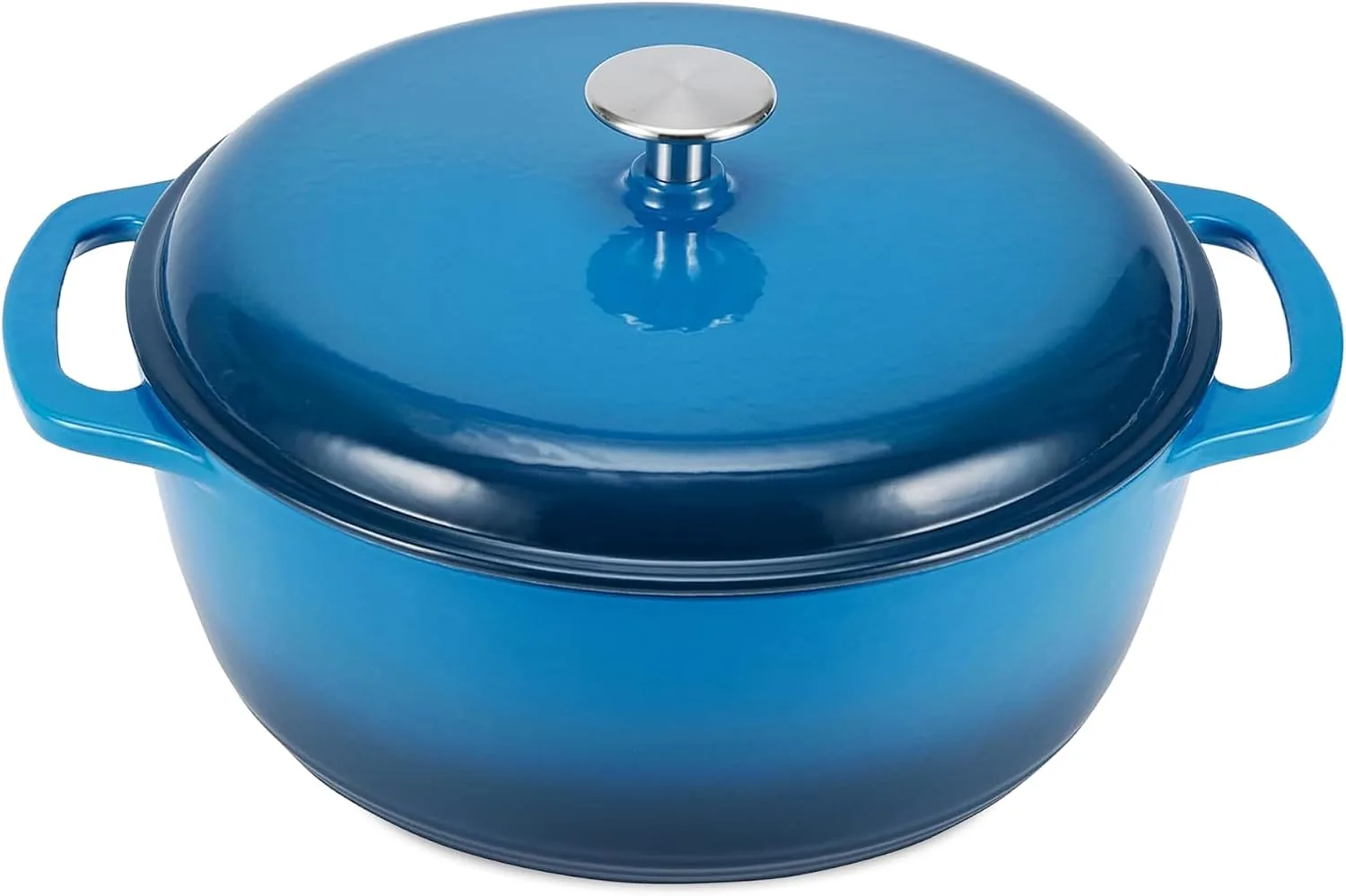 Budget king
Amazon Basics Enameled Cast Iron Dutch Oven, 6 Qt
The budget surprise and the most-reviewed pot here. Same 6 qt, same 500°F rating as Lodge; enamel chips more readily and handles run small with mitts.
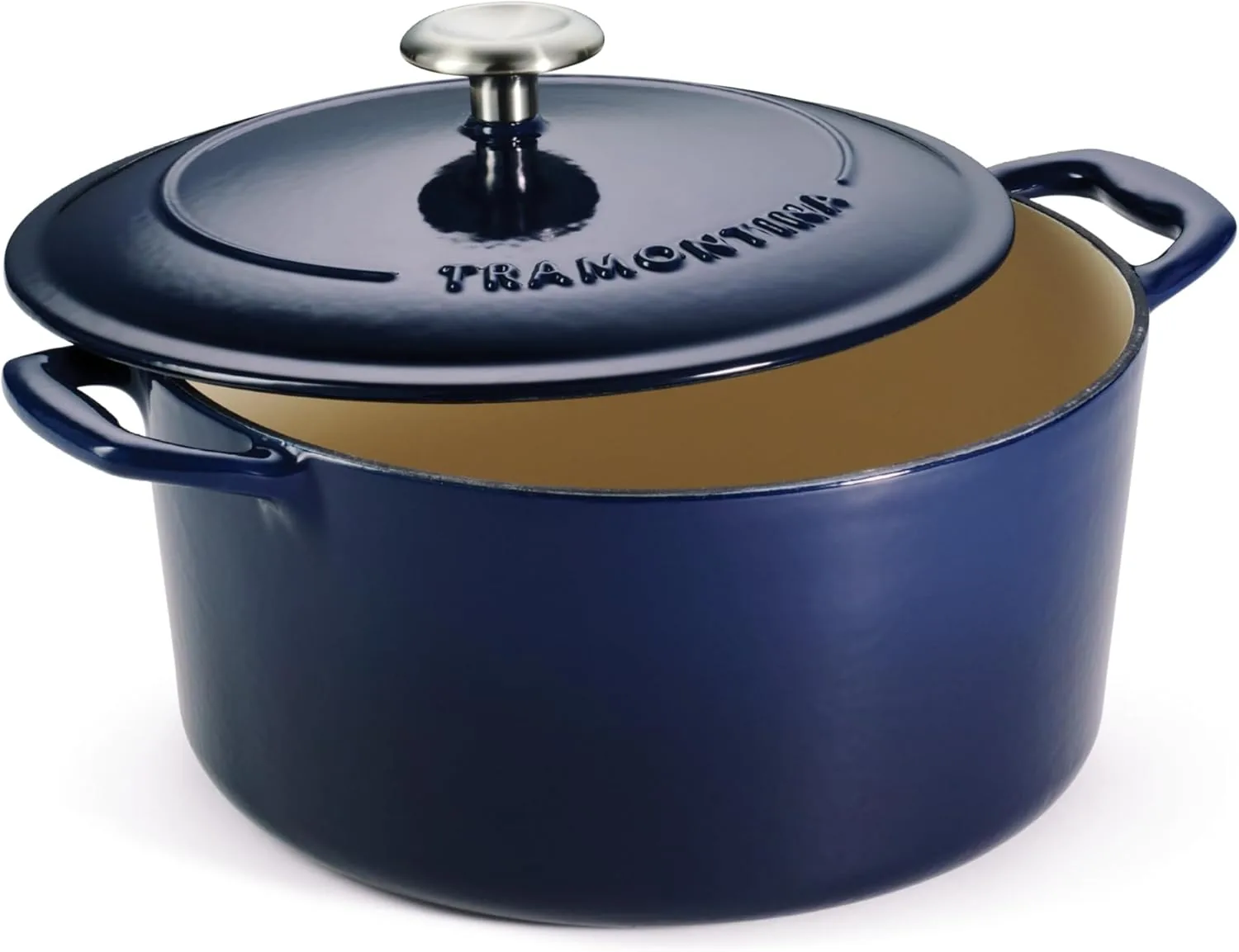 Cheapest enameled
Tramontina Bestow Enameled Cast Iron Dutch Oven, 5.5 Qt
The cheapest enameled pot that works. One real limit: 450°F max oven temp, which matters if you preheat for bread at 500°F.
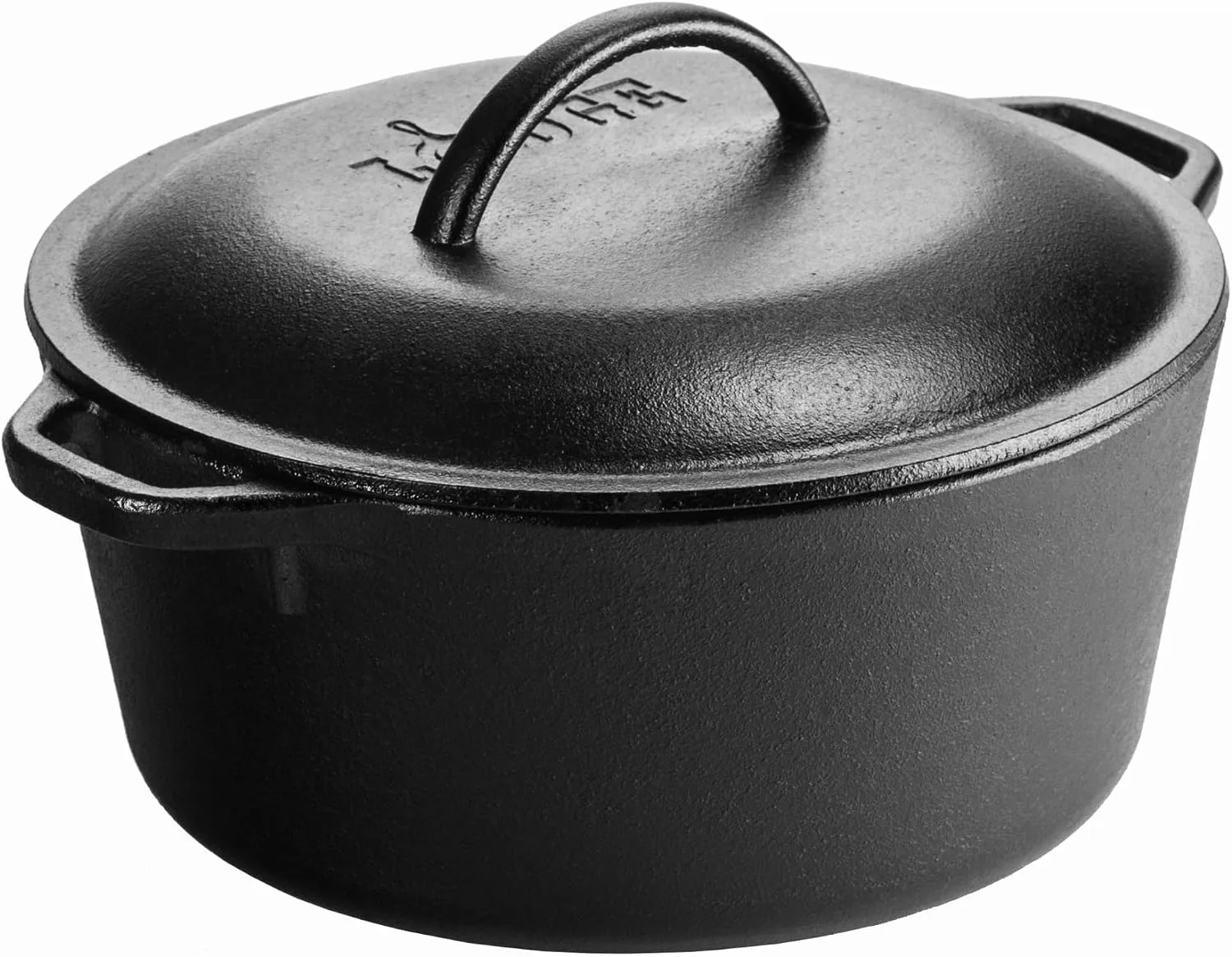 Bare cast iron
Lodge Cast Iron Dutch Oven, 5 Qt, Pre-Seasoned
The lifetime pot. No enamel to chip, adds a little dietary iron, and lasts generations — if you keep up the seasoning and skip long acidic simmers.
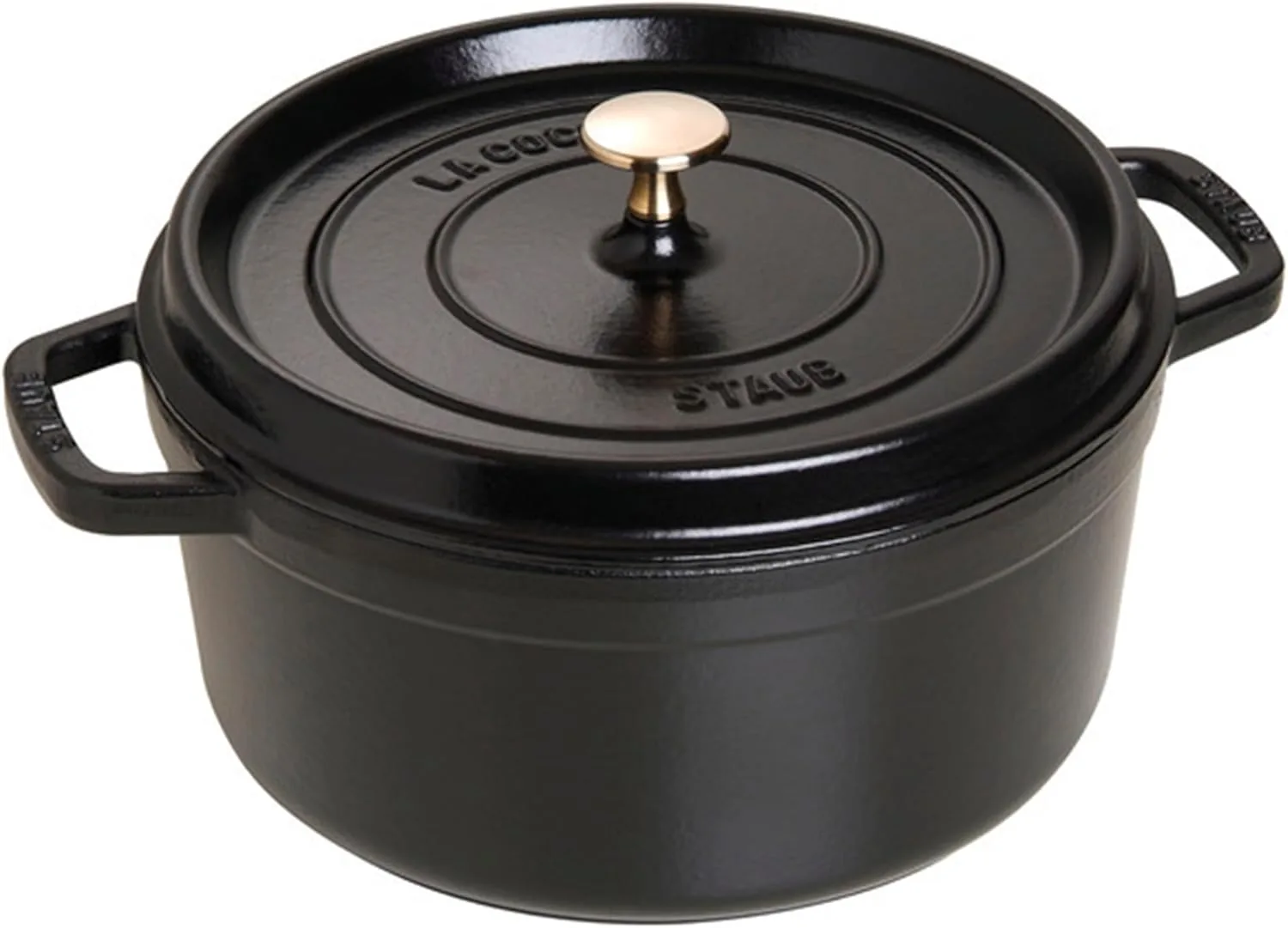 Premium pick
Staub Cast Iron Round Cocotte, 5.5 Qt, Black Matte
The chef’s premium. Matte black interior browns better and hides stains; self-basting lid spikes are genuinely clever. Heavy, and firmly premium.
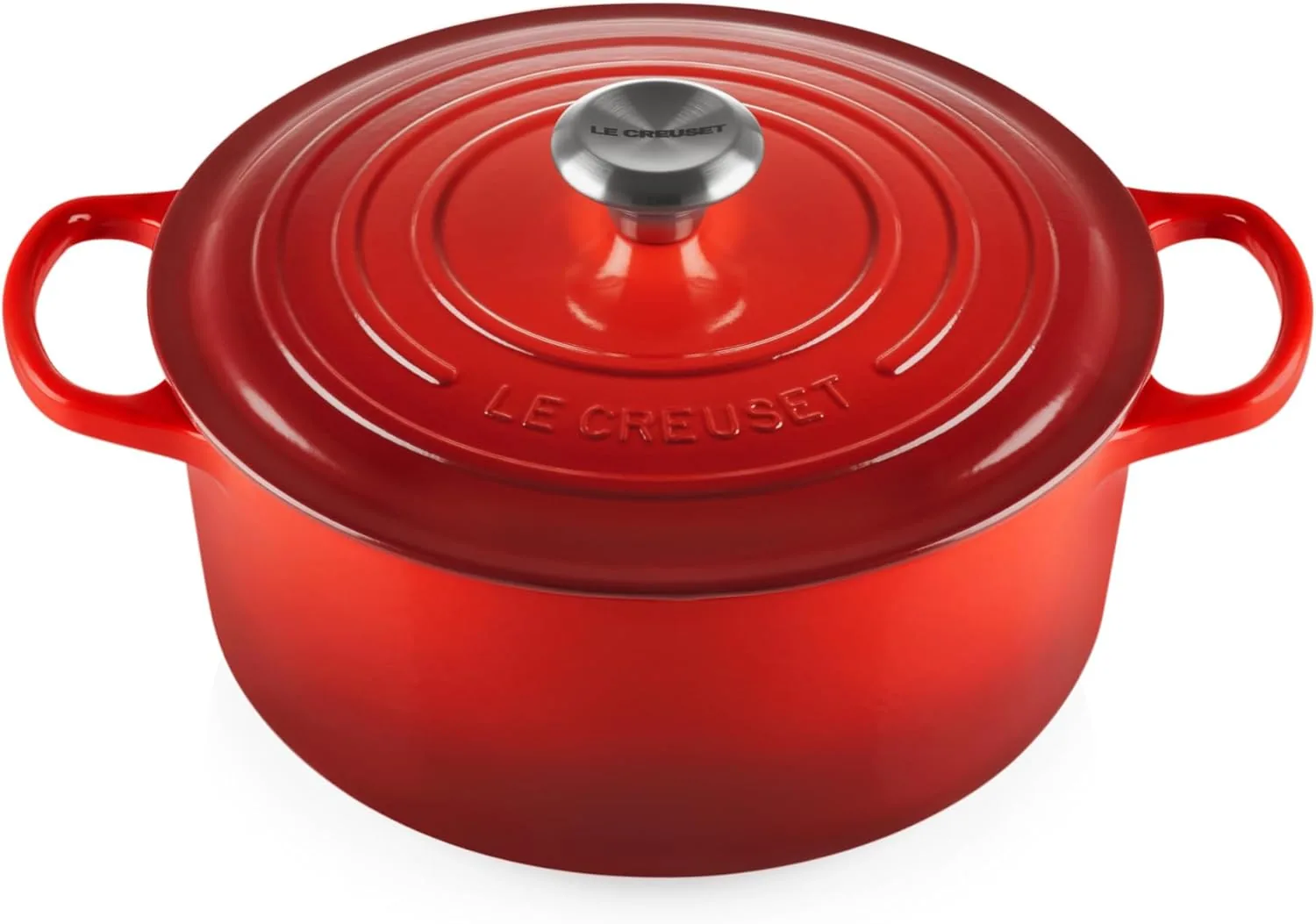 The icon
Le Creuset Signature Round Dutch Oven, 5.5 Qt, Cerise
The icon. Chip-resistant enamel, lifetime warranty, heirloom looks — about 15% more pot for 5x the Lodge’s price. Earn it after year eight.
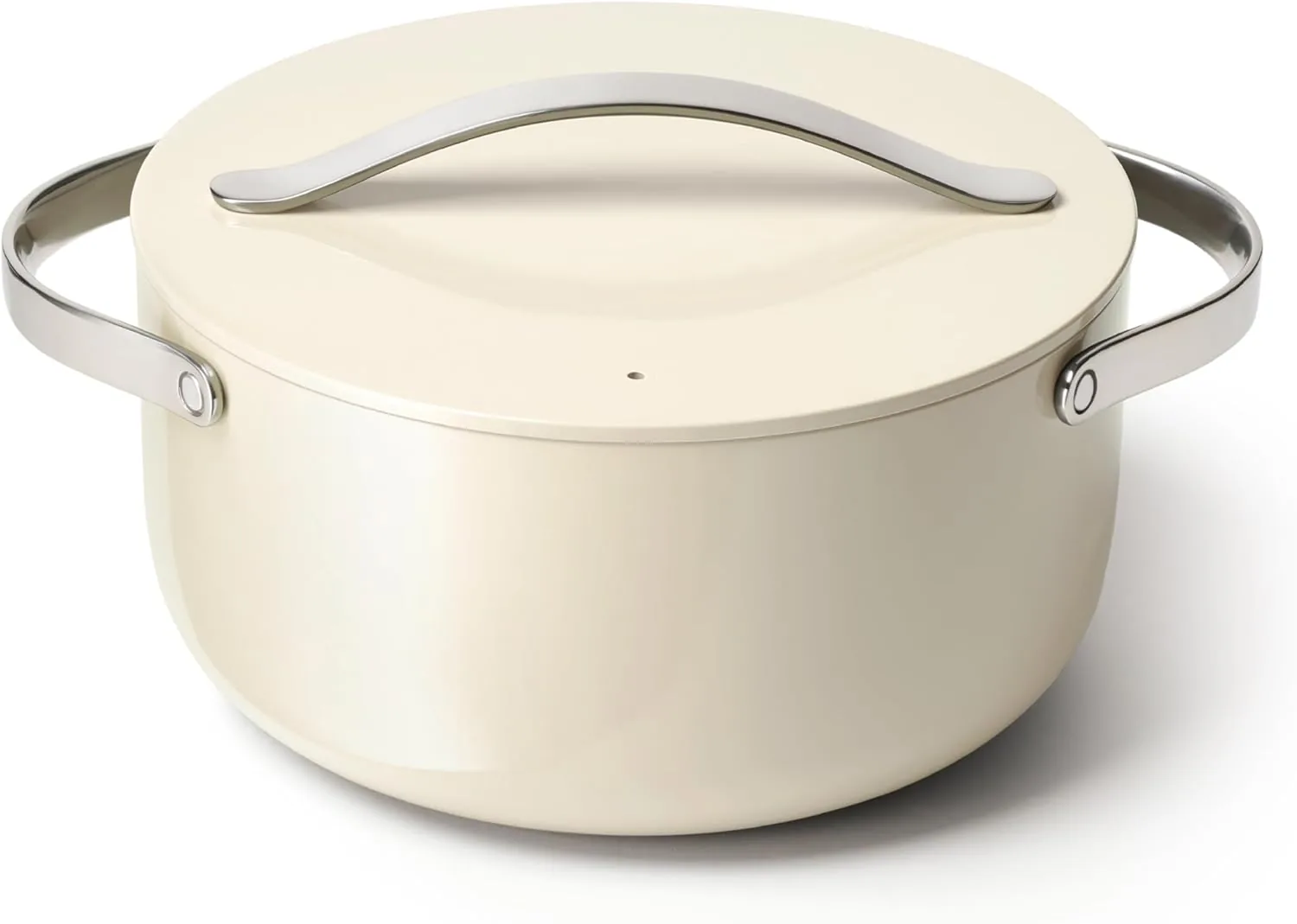 Lightweight
Caraway Non-Stick Ceramic Dutch Oven, 6.5 Qt
The lightweight. Half the weight of cast iron and PTFE-free — the pick for wrists that can’t lift 18 lb of stew. Ceramic coating wears in years, not decades.
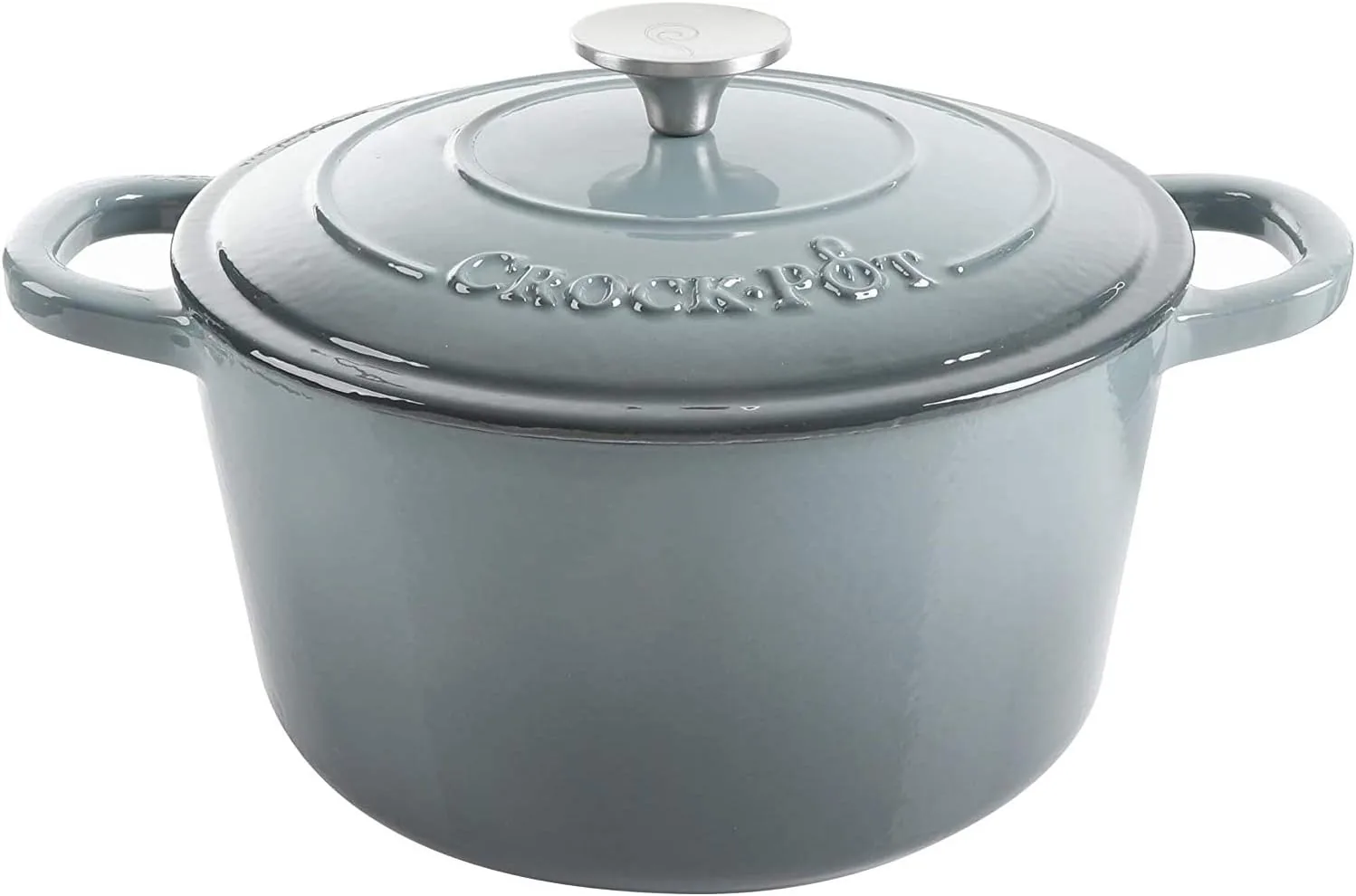 Family size
Crock-Pot Artisan Round Enameled Dutch Oven, 7 Qt
The family size. 7 qt feeds six-plus and swallows doubled recipes; more pot than most kitchens need, at a fair price.
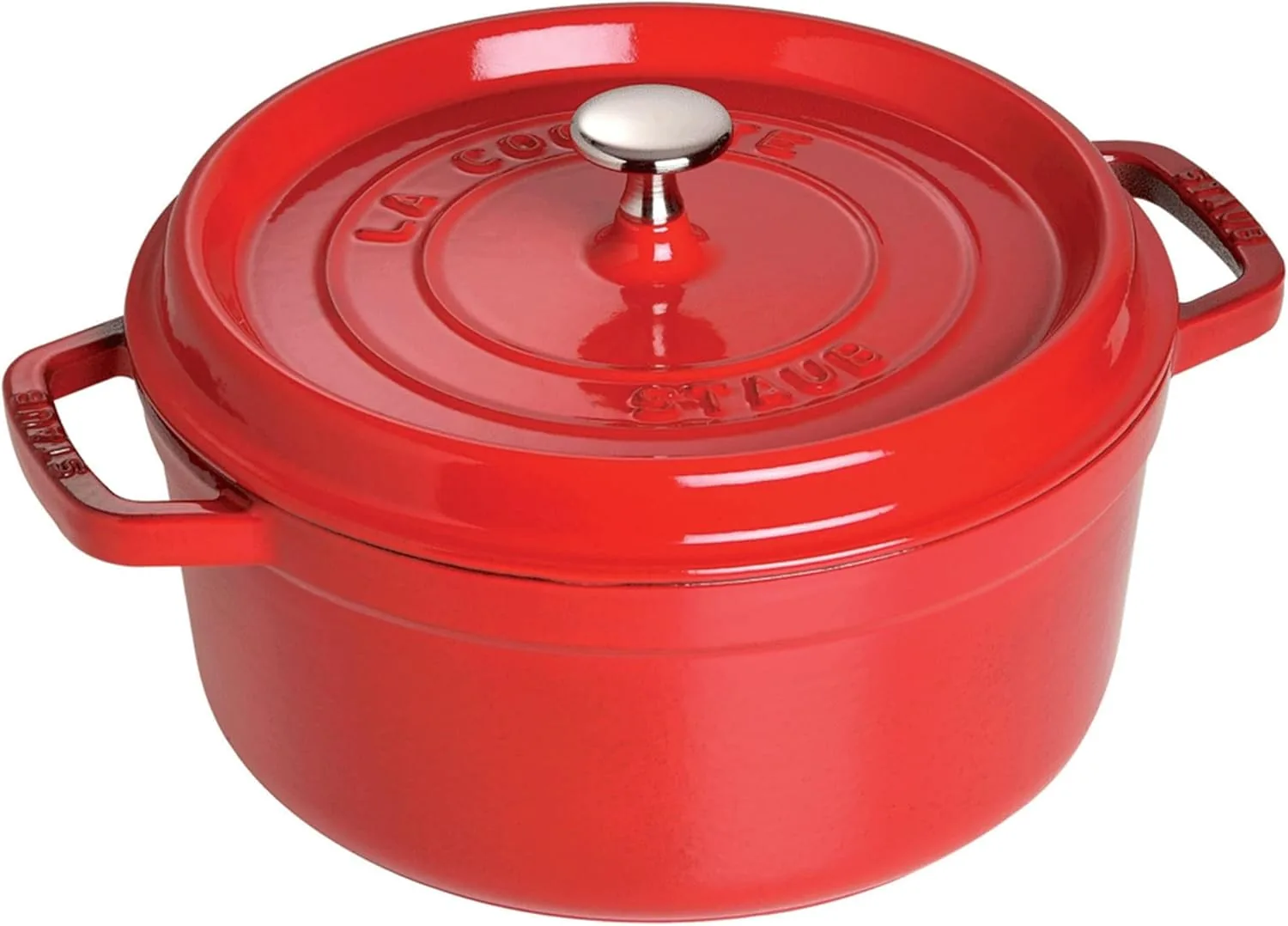 Cherry red
Staub Cast Iron Round Cocotte, 5.5 Qt, Cherry Red
The color statement. Same Staub cocotte, cherry-red enamel — pick it over the black matte only if the kitchen-shelf look matters to you.
The three tiers that matter
Under $100, the sweet spot, and the heirloom. Here’s how they compare.
| Amazon Basics Enameled Cast Iron Dutch Oven, 6 Qt | Best valueLodge Essential Enamel Cast Iron Dutch Oven, 6 Qt | Le Creuset Signature Round Dutch Oven, 5.5 Qt, Cerise | |
|---|---|---|---|
| Price | typically Budget | typically Mid-range | typically Premium |
| Size | 6 qt | 6 qt | 5.5 qt |
| Weight | ~8.5 lb | ~8.5 lb | ~9.5 lb |
| Oven temp | 500°F | 500°F | 500°F |
| Enamel quality | Chips easier | Chips easier | Chip-resistant |
| Interior color | Gradient | Cream | Cream |
| Warranty | 1 year | 1 year | Lifetime |
| Best for | 2 yr trial | 8+ years | Heirloom & looks |
| Our verdict | Good value | Top pick | 5x price, 15% gain |
| View on Amazon → | Check price → | View on Amazon → |
Photo Gallery
Dutch ovens — what the tests showed
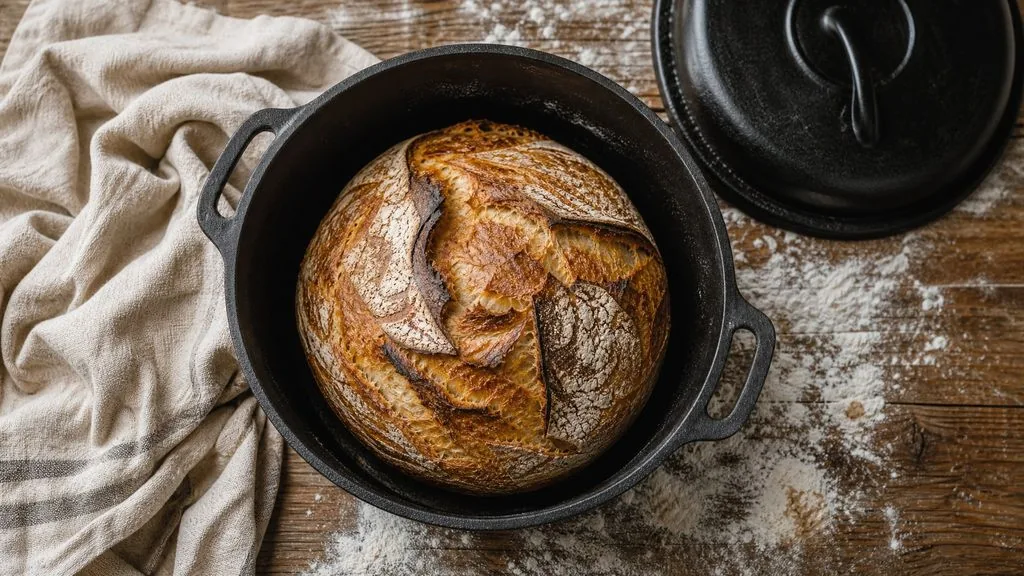
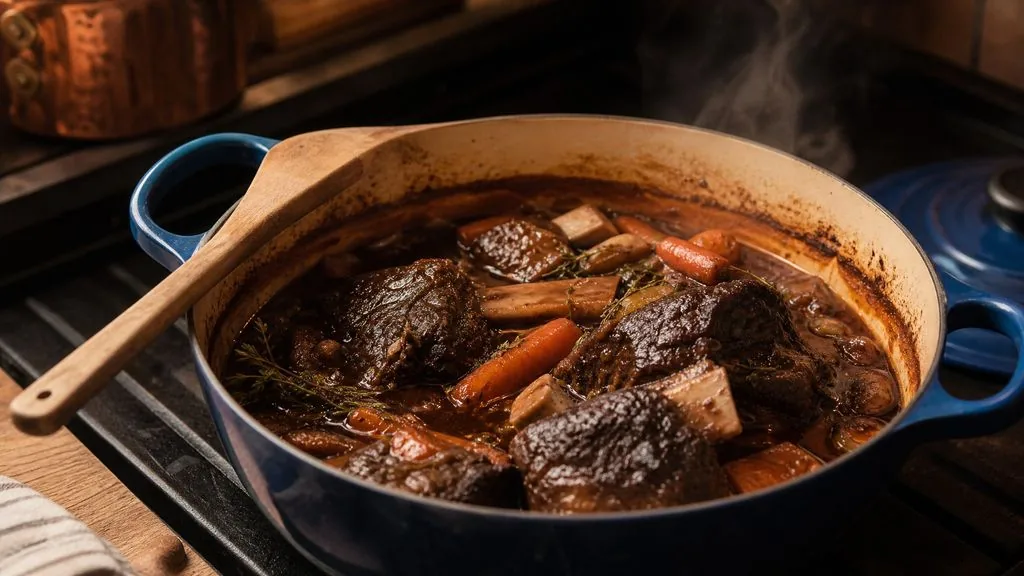
Sourdough spring, braising broth, the size range, and the material differences you see over years.
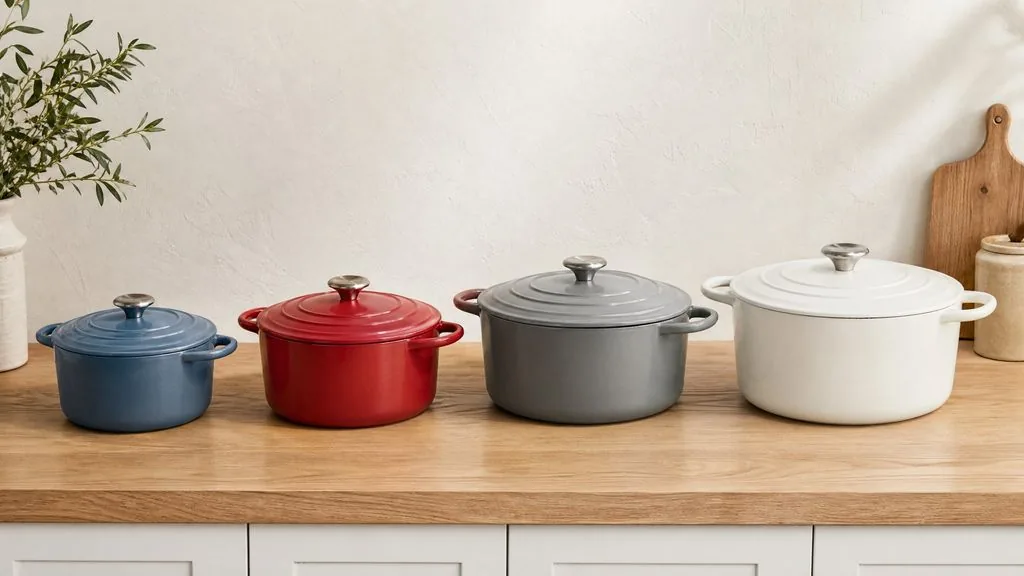
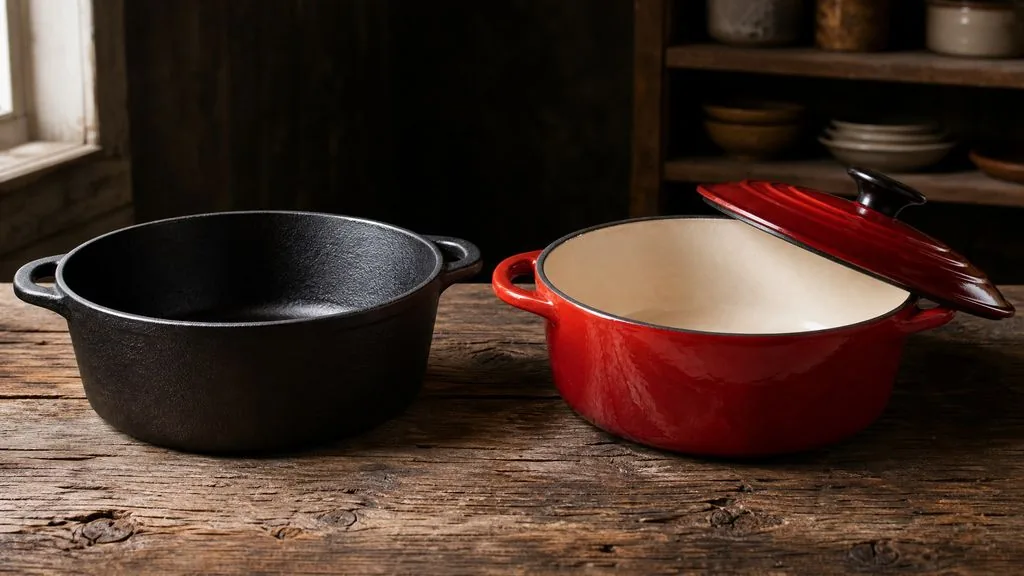
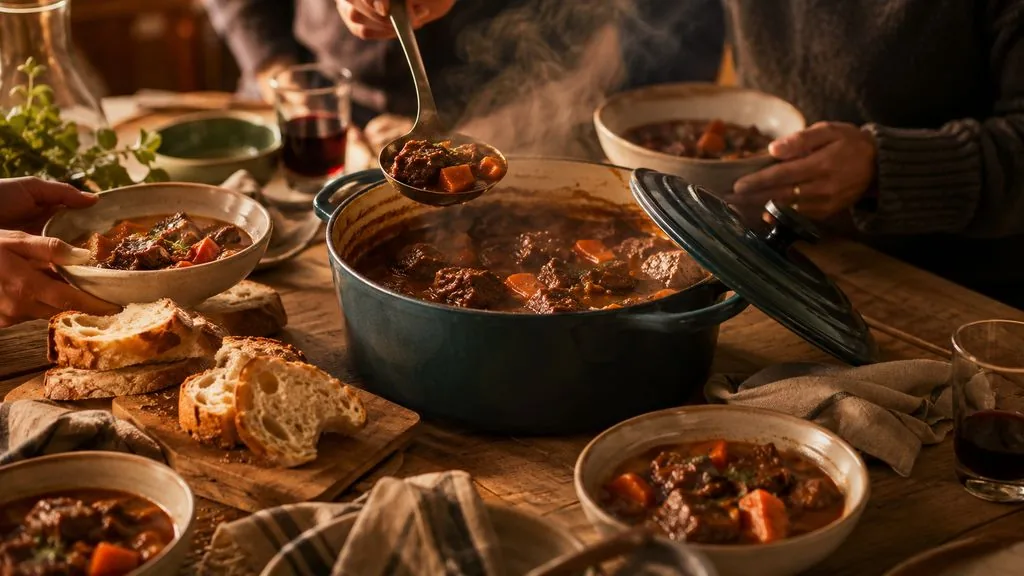
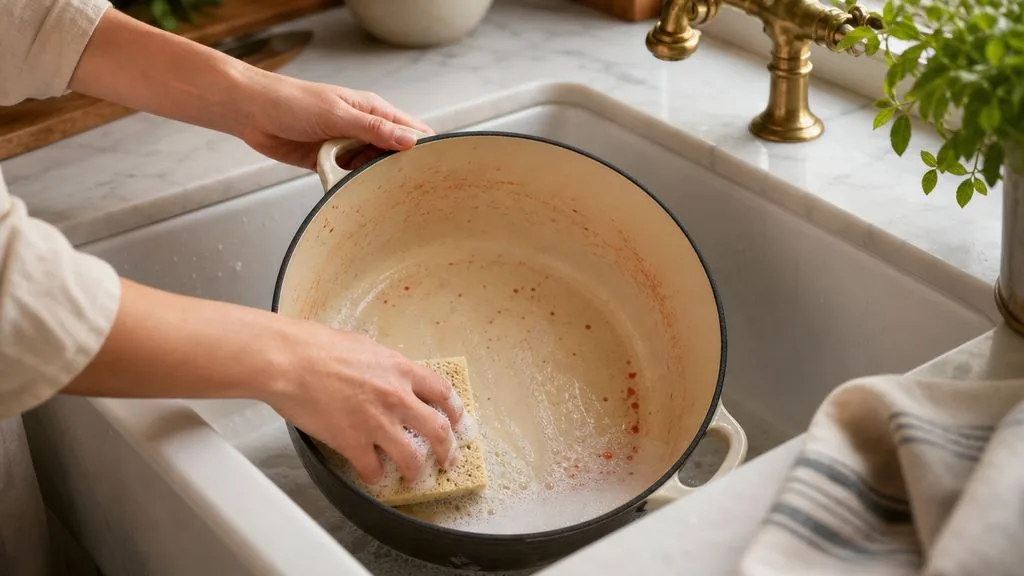
All 10 pots ranked
The full lineup from budget to premium, ranked by our tests. Click any card to read the full review and check today’s price.
Best valueThe iconPremium pickCheapest enameledBudget kingBare cast ironSourdough kingLightweightFamily sizeWhat owners say after years of cooking
Real themes from owners and months of our own testing.
Third year of weekly bread now. The crust is like a bakery loaf, and the cream interior tells you exactly how your fond is doing.
Couldn’t believe the price held up for this many braises. The handles are tight with thick oven mitts, but it does the job.
Sourdough finally got real oven spring. The flip trick means I stopped burning my knuckles loading dough.
Ten years in, zero chips. Heavy but the handles make it manageable. Worth the price if you’re keeping it for life.
Everything browns better against the black enamel. Weight is noted, but the self-basting lid spikes are genius.
The only pot my wrists can lift when full. PTFE-free, lightweight, and cleanup is easy. Wears over years, but no regrets.
Quick answers before you buy
The questions we hear most, answered straight.
Why are dutch ovens so expensive?
Porcelain enamel is fused to cast iron at 1,000°F+. Le Creuset makes every pot in France with individual inspection & a lifetime warranty. That craftsmanship costs.
Can I bake sourdough in a regular dutch oven, not the Combo?
Yes. Any 5–7 qt pot with a tight lid works. The Combo Cooker (3.2 qt) is genius because the skillet-lid flip means no burned knuckles loading dough. Preheat 30–45 min at 500°F.
Is there a Le Creuset rival that’s cheaper?
The Lodge 6 Qt produces identical bread & braises. Staub (matte black interior) is better than Le Creuset for browning. Each step down trades chip-resistance & warranty for price.
Can I use a dutch oven on a glass cooktop?
What material is healthiest?
What size should I buy?
Can I boil pasta in a dutch oven?
Yes. Pasta is fine in enameled. Occasional in bare iron; avoid long acidic simmers in bare cast iron.
Is it worth buying Le Creuset over Lodge?
No, unless you’re keeping it for a lifetime heirloom. Lodge is 5x cheaper for ~15% performance gain (better enamel, lifetime warranty, looks).
Still comparing?
Browse the full range of dutch oven pots — filter by size, material and price, and check today’s deals before you decide.
- Every dutch oven pot we tested — plus the sizes and colors we didn’t
- Filter by size, material, brand and today’s price
- Prices move often; lightning deals show up on the listing page
Dutch ovens, explained
A dutch oven is a cast iron pot with a tight lid that traps the moisture from braising meat and the steam from baking sourdough. The mass holds heat so evenly that bread springs with oven spring and stew braises below 212°F where a regular pot would scorch. It’s the difference between cooked and transformed. You don’t need a premium Le Creuset to get that transformation. The mid-range Lodge does identical work. Here’s what you need to know.
What a dutch oven actually is
Three things set a dutch oven apart from a regular pot. First is mass: a dutch oven is 3–5 times heavier than a regular pot because cast iron holds heat. Second is an oven-safe, moisture-sealing tight lid that traps the food’s own steam. Third is how that moisture cycles: steam rises, condenses on the cold lid, and falls back down as liquid, braising the meat below 212°F where a thin pot would scorch.
The name traces to 1707 when Abraham Darby patented a casting process copied from Dutch sand-mold brass foundries. The Brits still call it a casserole or cast iron casserole. The Dutch didn’t invent it; they just inspired the name.
Enameled vs bare cast iron vs ceramic
Enameled cast iron is cast iron with a glass coating fused on at 1,000°F+. No seasoning, no iron leach, no PTFE. If the enamel chips, the bare iron underneath is still safe to cook on—it’s a cosmetic issue. Enamel is lead- and cadmium-free when made by reputable brands (FDA tested). Lodge, Le Creuset, Staub, and Basics all pass that test. The trade is durability: Le Creuset’s enamel chips less than Lodge’s, but both work identically for bread and braises.
Bare seasoned cast iron has no enamel to chip. It adds small amounts of dietary iron and is also safe. The trade is upkeep: you season it, never soak it, and dry it immediately after washing. Long acidic simmers (tomato, vinegar) will pit bare iron. Bare iron lives on wood stoves; enameled lives in regular kitchens.
Ceramic non-stick (Caraway) is aluminum core with a ceramic coating. About half the weight (~5 lb vs ~8.5 lb), PTFE/PFOA-free, but the coating wears in years, not decades. Good for people with wrist or arthritis issues who can’t lift 8.5 lb of hot food.
The price-tier truth
Tramontina is 90% of what the expensive ones do. Basics is that same 90%, just larger (6 qt vs 5.5 qt). Lodge is our sweet spot: enameled, 6 qt, 500°F oven-safe, eight-year durability. Staub is Lodge’s matte-black cousin—better browning, better self-basting lid spikes, less common in North America. Le Creuset is the heirloom: individual craftsmanship, lifetime warranty, chip-resistant enamel, French-made prestige. That gap is 5x price for ~15% functional gain.
America’s Test Kitchen says it plainly: both produce identical results for bread and braises. Serious Eats: Lodge is the sourdough starter; upgrade to Le Creuset only after 50 loaves if you still want it. Wirecutter: Lodge is best overall value; Le Creuset is best for heirloom status.
Sizing: the one choice that actually matters
A 3.2 qt pot (Lodge Combo Cooker) fits a 500–750 g artisan loaf. Perfect for sourdough, too small for family stew. A 5–5.5 qt pot serves 3–4 people. A 6–6.5 qt is the family default, feeds 4–5. A 7 qt feeds 6+ and lets you make double-batch chili. One household can own two: the Combo Cooker for bread, a 6 qt for braising. The weights matter. A full 6 qt pot of stew weighs 25–30 lb. Can you lift that out of a 500°F oven without burning yourself or dropping it? If not, pick Caraway (~5 lb) or a smaller pot.
Care that actually matters
Don’t preheat enamel empty on high. Don’t thermal shock it (don’t dump cold water into a hot pot). Don’t use metal utensils carelessly on enamel. Hand-wash if you want decades of use; dishwashers are listed but slowly dull the finish. Store acidic leftovers in glass, not in bare cast iron.
Boiling water and pasta are fine in enameled. Occasional in bare iron. Never leave bare iron wet; dry it immediately. A seasoned bare cast iron pot, kept out of the dishwasher, lives forever.
Preheat 30–45 minutes at 450–500°F. The sealed pot traps the dough’s own steam for the first ~20 minutes, producing oven spring and crust. Lid off for the last 15–20 minutes to brown. Tramontina maxes at 450°F (a real limit for sourdough bakers); everything else is 500°F+.
Which of the ten should you actually buy
If you bake sourdough weekly, buy the Lodge Combo Cooker. The 3.2 qt pot plus skillet-lid is the standard for 500–750 g loaves. The flip trick means you load dough into the deep part without burning your knuckles. Nothing else does this.
If you braise for a family of 3–4 and bake monthly, buy the Lodge 6 Qt enameled. Eight-year durability, one-year warranty, enamel chips easier than Le Creuset, cream interior stains from tomato and turmeric, identical bread and braises to premium Le Creuset. No regrets.
If you’re under 30 and testing the hobby, buy the Basics 6 Qt. The same 1–2 year durability window as Tramontina, a shorter track record than the Lodge, handles run small with thick oven mitts. Upgrade to Lodge after a year if you keep using it.
If you want heirloom status and cook often, buy the Le Creuset (5.5 qt) after you’ve used a Lodge for eight years. You’ll know if you want it. The chip-resistant enamel, lifetime warranty, and individually crafted weight feel expensive because they are. Resale value is real; you might lend it to a grandkid.
If you have wrist or arthritis issues, buy Caraway. Half the weight (~5 lb), ceramic non-stick, PTFE/PFOA-free, easy cleanup. The coating wears in years not decades, so it’s not heirloom. But you can actually lift the pot.
If you never clean the pot properly, buy bare cast iron. It lives on the wood stove. Seasoning improves over years. Enamel chipping isn’t an option.
The honest bottom line
A dutch oven is the single pot that changes how you cook. It braises where a regular pot scorches; it bakes bread where a Dutch oven competitor would fail. The mid-range Lodge is the right answer for 95% of kitchens. If you find yourself baking sourdough every Sunday after two years with the Lodge, then you’ve earned the decision to buy Le Creuset. Until then, lodge and be done.
Frequently asked questions
What is the best dutch oven pot?
The Lodge 6 Qt enameled is our top pick — it produces identical bread & braises to Le Creuset at one-fifth the price. For sourdough, the Lodge Combo Cooker is the standard. On a budget, the Basics holds up fine for 1–2 years.
Why are dutch ovens so expensive?
Porcelain enamel is fused to cast iron at 1,000°F+; Le Creuset makes every pot in France with individual inspection & a lifetime warranty. Budget brands carry 1-year warranties.
Should I buy Le Creuset or Lodge?
Le Creuset costs about 5x the Lodge — for ~15% functional gain (better chip-resistance, lifetime warranty, looks). Buy Lodge first; earn the Le Creuset after eight years if you still want it.
Can I cook sourdough bread without a dutch oven?
What size dutch oven should I buy?
Is bare cast iron or enameled better?
They’re different. Enamel is glass — no seasoning needed, no iron leach, no PTFE. Bare cast iron adds small dietary iron, needs seasoning upkeep & dislikes long acidic simmers. Pick enameled for ease, bare for a lifetime pot if you’re willing to maintain it.
Still have questions? Email us hello@dutchovenpot.com