What Is a Dutch Oven? Definition, Etymology, and How It Works
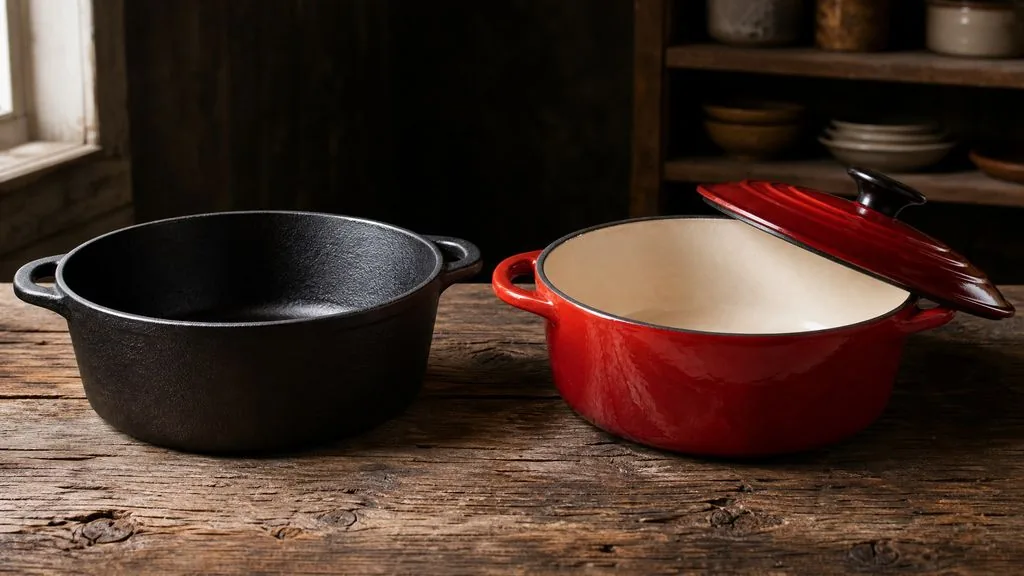
The anatomy: mass and lid
What makes a dutch oven different from a regular pot is simple: weight and a tight lid. A dutch oven is 3–5 times heavier than a regular pot because cast iron holds heat like nothing else. The tight lid seals in steam and moisture. When you braise, the pot's heat and the meat's own liquid create a convection cycle that tenderizes tough cuts. When you bake bread, the sealed pot traps the dough's steam for the first 20 minutes, which creates the crackly crust and oven spring. A thin pot loses that steam; a dutch oven holds it.
Enameled vs. bare cast iron
Most dutch ovens are enameled—a glass coating fused to the cast iron at 1,000°F+. Enamel is tough, requires no seasoning, and won't rust. The downside: enamel can chip if you drop it or bang the lid. A bare dutch oven has no coating. It needs seasoning to prevent rust, dislikes long acidic simmers, and demands immediate hand-drying. But it lasts forever if you care for it, and many cooks prefer the nonstick patina that builds over years.
Etymology: the English copied Dutch sand-molds
The pot is called a "dutch oven" because of a 1700s English casting process. English foundries copied the sand-mold technique used by Dutch brass foundries—the Dutch were masters of casting. Abraham Darby patented an improved coke-fired casting method in 1707. English pots made by this method became known as "dutch ovens" because the technique came from Dutch metalworkers. The name stuck even though the pots are now made everywhere.
What Brits call it
In Britain, the same pot is often called a cast iron casserole dish or just casserole. Americans call it a dutch oven. The pot is the same; the name is regional.
Why you need one (or why you think you do)
A dutch oven is built for two things: braising and bread baking. Braising is slow-cooking tough cuts (beef chuck, pork shoulder, chicken thighs) in the oven with liquid. The heavy pot and tight lid mean no scorching, even heat, and meat that shreds itself. Bread baking, especially sourdough, needs the sealed-pot steam at 450–500°F. You can braise in a regular oven-safe pot with foil under the lid. You can bake bread in a cast-iron skillet with a baking sheet as a dome. But a dutch oven does both perfectly, and it is overkill-proof.
Price and durability
A basic enameled dutch oven costs budget to mid-range. Top brands like Le Creuset sits in the premium tier. The cheap pots work fine for years. The expensive ones last for decades and pass down. A bare cast-iron dutch oven, properly seasoned, can outlive you.
A dutch oven is a heavy pot with a tight lid, made to trap steam and distribute heat evenly. Mass + lid = the magic. Enameled ones need no seasoning and last 10+ years; bare ones last forever but need care. You really need one only if you braise or bake bread regularly.
Frequently asked questions
What is a dutch oven used for?
Braising (slow-cooking tough cuts in the oven) and bread baking, especially sourdough. The heavy pot and tight lid trap steam and distribute heat evenly, which is why both work perfectly.
Is a dutch oven the same as a regular pot?
No. A dutch oven is 3–5 times heavier and has a tight-fitting lid. The mass holds heat longer and the lid seals in steam. A regular pot loses both.
What is enamel on a dutch oven?
Porcelain enamel is a glass coating fused to cast iron at 1,000°F+. It is tough, requires no seasoning, and won't rust. It can chip if dropped, unlike bare cast iron.
Do I need to season an enameled dutch oven?
No. Enameled pots need no seasoning. Bare cast iron does. Wash enameled pots normally; hand-dry bare iron immediately.
Why is it called a dutch oven?
An English casting technique from the 1700s copied Dutch sand-mold methods. Abraham Darby patented the method in 1707, and the name stuck. Brits call the same pot a cast iron casserole.
How long does a dutch oven last?
Enameled: 10+ years, sometimes decades. Bare cast iron: a lifetime if properly seasoned and cared for. Le Creuset backs its pots with a lifetime warranty.