How to Use a Dutch Oven: First Braise, First Loaf, Cleaning, and the Don't List
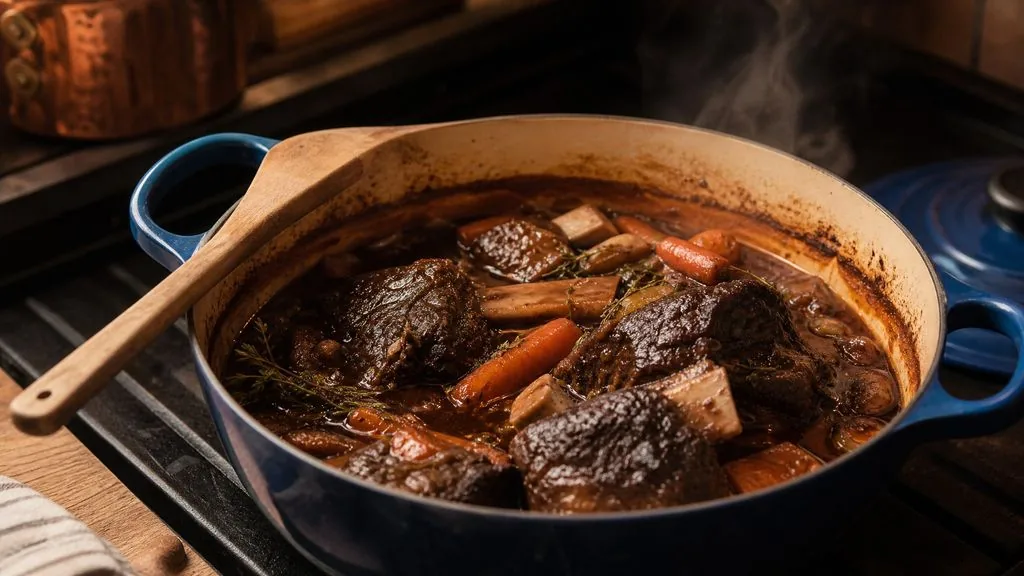
Your first braise: the three-step method
Step 1: Brown the meat. Heat your dutch oven on the stovetop over medium-high heat. Do not preheat empty on high—enamel does not like that. Once hot, brown your meat (beef chuck, pork shoulder, chicken thighs) on all sides. Do this in batches if needed. The browning takes 10–15 minutes and is not optional. This is where flavor comes from.
Step 2: Build the braise. Remove the meat. Sauté aromatics (onion, garlic, carrot, celery) in the same pot for 2 minutes. Add liquid (stock, wine, water) and scrape the bottom—this is called deglazing. Put the meat back in and nestle it into the liquid. You want the liquid to come halfway up the meat, not submerge it completely.
Step 3: Cover and oven-braise. Put the lid on. Transfer the whole pot to a 325°F oven. Braise for 2–4 hours depending on the cut. Beef chuck: 3 hours. Pork shoulder: 2.5 hours. Chicken thighs: 1.5 hours. The meat is done when it shreds easily with a fork. The collagen has turned to gelatin and the meat is tender. After braise, the liquid (now called jus) is rich and delicious. Use it as a sauce or reduce it on the stovetop.
Your first loaf: preheat, load, seal, bake
Step 1: Preheat 30–45 minutes. Place your dutch oven inside the oven and preheat to 500°F. A cold pot loaded with dough will drop the temperature and ruin your oven spring. You need the pot screaming hot.
Step 2: Load the dough carefully. Use a parchment-paper sling. Roll the dough onto parchment, transfer the whole parchment into the hot pot (do not burn your knuckles—use thick mitts). The dough goes into the pot; the parchment stays loose in there.
Step 3: Bake covered. Put the lid on immediately. Bake for 20 minutes. The enclosed pot traps steam from the dough's moisture, which creates the crackly crust and oven spring.
Step 4: Bake uncovered. Remove the lid and bake for 15–20 minutes more. The pot is now open and dry air browns the crust. The bread is done when it is deep golden brown and sounds hollow when you tap it.
Cleaning and care
Enameled pots: Hand-wash with soap and warm water. A soft sponge or cloth is fine. Dishwasher is technically OK but hand-washing is gentler on the enamel. Dry immediately. Do not let it sit wet. Do not soak for hours (enamel can absorb water and cause rust underneath). Staining from tomato, turmeric, or wine is normal and cosmetic. To lighten stains, simmer a baking soda and water slurry inside the pot.
Bare cast-iron pots: Rinse immediately after use while still hot. Dry completely with a towel. Never let it air-dry. Wipe a thin coat of vegetable oil over the interior. The seasoning builds over time—more use means better non-stick.
The don't list
- Don't preheat empty on high. Enamel does not like a dry, empty pot heated aggressively. Heat gently or with liquid inside.
- Don't thermal-shock a hot pot. Do not pour cold water into a hot dutch oven. Do not put a hot pot on a cold surface. Rapid temperature swings can crack enamel over time.
- Don't use metal utensils carelessly. A metal spoon hitting the enamel repeatedly will scratch it. Use wooden or silicone spoons when possible.
- Don't store acidic food inside. Do not leave tomato sauce or vinegar-based leftovers in the bare-iron pot overnight. Transfer to glass or ceramic. Bare iron + acid = rust.
- Don't slide it on glass or induction cooktops. Lift and set down gently. Sliding cast iron scratches glass cooktops and can create friction heat.
- Don't neglect seasoning (bare iron only). Hand-dry and oil immediately. Bare iron left wet will rust overnight.
Brown first, braise second (2–4 hours at 325°F). For bread: preheat 45 min at 500°F, load dough, cover 20 min, uncovered 15–20 min. Hand-wash and dry enameled pots. The pot is forgiving. A small chip or stain is cosmetic. Use it regularly and it will outlast your kitchen.
Frequently asked questions
How long do I preheat a dutch oven?
30–45 minutes at 450–500°F for braising and bread. A cold pot loaded with cold dough kills oven spring. You need it screaming hot.
What is a parchment-paper sling for bread?
Roll your dough onto parchment paper, then use the parchment as a sling to transfer the whole thing into the hot pot. The parchment prevents sticking and protects your hands.
How do I know when my braise is done?
The meat shreds easily with a fork. Beef chuck: ~3 hours. Pork shoulder: ~2.5 hours. Chicken thighs: ~1.5 hours at 325°F. The collagen turns to gelatin and the meat falls apart.
What temperature should I braise at?
325°F is standard. Never below 200°F (too slow) or above 350°F (meat dries out). 325°F is the sweet spot.
Can I clean my dutch oven in the dishwasher?
Technically yes (enameled pots are dishwasher-safe), but hand-washing is gentler. Dry immediately after. Do not soak for hours.
Will a stain inside my pot hurt anything?
No. Interior staining from tomato or turmeric is purely cosmetic. To lighten it, simmer a baking soda and water paste inside the pot.