Healthiest Dutch Oven Material: Enamel vs. Bare Iron vs. Ceramic Non-Stick
Enameled cast iron: the safe default
Porcelain enamel is a glass coating fused to cast iron at 1,000°F+. The enamel is inert and non-reactive. It does not leach iron into food. It does not react with acidic ingredients like tomato or wine. Quality enamel is FDA-tested for lead and cadmium and tested to be lead-free. The only risk is if the enamel chips—a chipped patch exposes bare iron underneath. Cooking on bare iron is still safe, but the cosmetic flaw annoys people. This is why Le Creuset charges more for chip-resistant enamel.
Bare cast iron: adds dietary iron
Bare seasoned cast iron is one of the oldest and safest cookware options in human history. It is seasoned with vegetable oil (typically grapeseed or soybean oil) that builds a natural non-stick coating over time. It will add small amounts of iron to food—roughly 1–2 mg per cooking session, depending on what you cook and how long. For most people, this is a dietary benefit, not a risk. People with hemochromatosis or iron-overload conditions should avoid it. For everyone else, the iron is fine and often helpful.
The catch: bare iron dislikes long acidic simmers. Tomato sauce, wine-based braises, and vinegar can degrade the seasoning. A single long acidic braise will not ruin the pot, but repeated 2-hour tomato simmers can wear the seasoning and cause rust spots. This is why enameled cast iron is the default choice for braising—it handles acidic foods without degradation.
Ceramic non-stick (Caraway): PTFE/PFOA-free, lighter weight
Ceramic non-stick (like Caraway) has an aluminum core with a ceramic coating. It is free of PTFE and PFOA ("forever chemicals" used in traditional Teflon). The aluminum core makes it roughly half the weight of cast iron—Caraway is ~5 lb vs. Lodge at ~8.5 lb, which is a huge difference if you have arthritis or wrist issues. The ceramic coating is food-safe and does not require seasoning. The downside: the coating wears. After 3–5 years of regular use, the non-stick wears away and you need to replace the pot. Cast iron lasts 20+ years. Ceramic lasts 3–5.
The myths and the facts
- Myth: Cast iron is unhealthy. Fact: Bare cast iron is one of the safest cookware options ever. It adds iron, requires no chemical coatings, and lasts forever.
- Myth: You will leach iron into every meal. Fact: You add ~1–2 mg per session, which is negligible for most diets.
- Myth: Enamel is toxic. Fact: Quality enamel is FDA-tested lead-free glass. It is inert and non-reactive.
- Myth: Non-stick pans are dangerous. Fact: Ceramic non-stick (Caraway) is PTFE/PFOA-free and safe. Traditional Teflon (PTFE) is safe at cooking temperatures; PFOA is the legacy concern, now phased out.
Which one to pick
For most cooks: Enameled cast iron. It handles any food, requires no seasoning, lasts 10+ years. Lodge or Le Creuset. For arthritis or wrist issues: Ceramic Caraway at ~5 lb. You sacrifice heat mass and longevity but gain wrist relief. For bare iron lovers: A bare pot works for bread and meat braises (not long acidic simmers). Season it, hand-dry immediately, and you have a lifetime pot.
All three are safe. Enamel is the default: durable, no seasoning, handles everything. Bare iron is safe and adds dietary iron—just avoid long acidic simmers. Ceramic Caraway is for people with wrist issues; it wears faster but is lighter. Pick based on use and maintenance tolerance, not health fear.
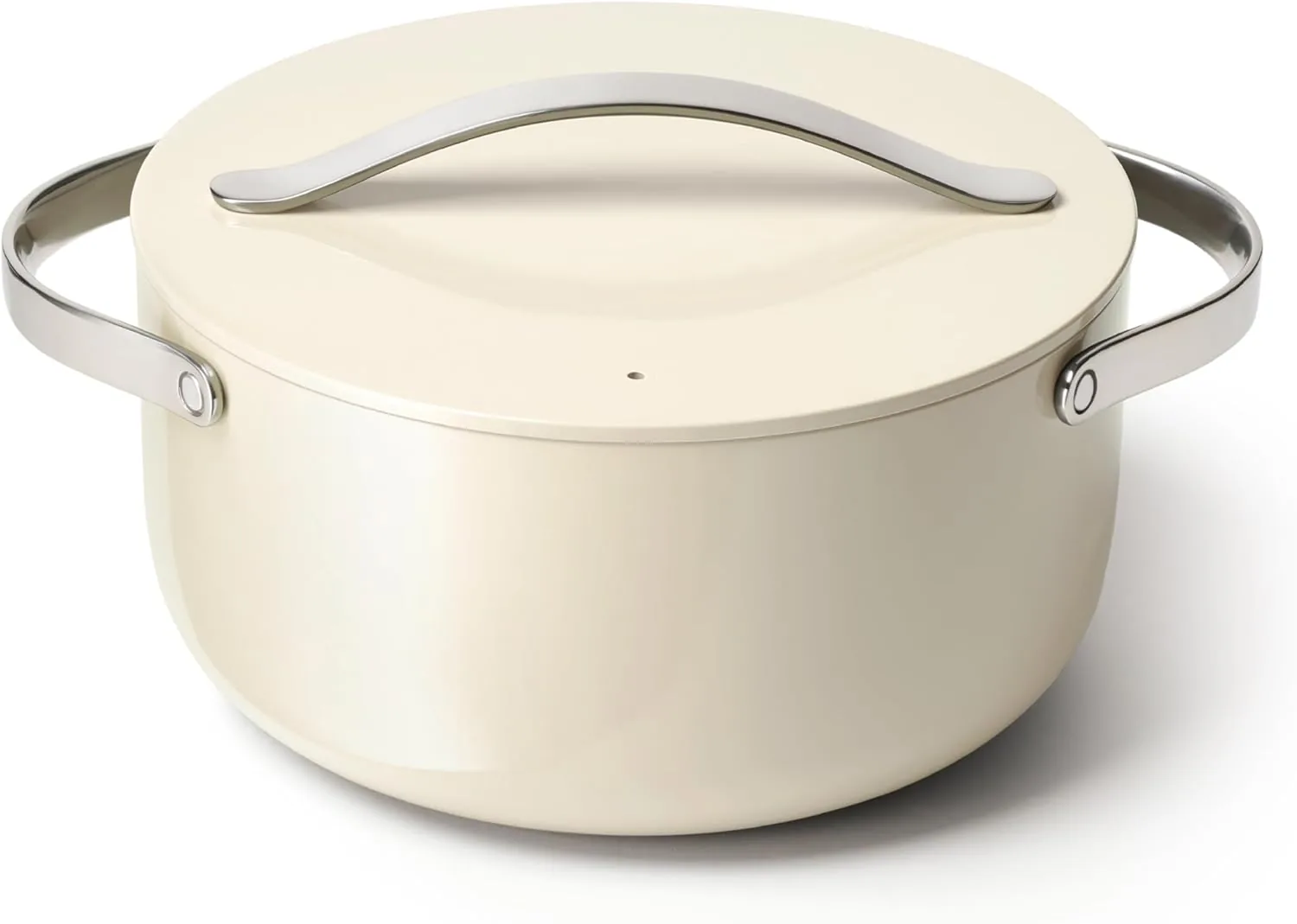
Prices and availability change often — the button shows today’s live price.
Frequently asked questions
Is enameled cast iron healthy?
Does cast iron add iron to food?
Yes, roughly 1–2 mg per cooking session with bare iron. For most people, this is a dietary benefit. People with hemochromatosis should avoid it.
Is bare cast iron unhealthy?
No. Bare cast iron is one of the oldest and safest cookware options in human history. The iron it adds is dietary iron, not contamination.
Can I braise acidic food in bare cast iron?
Once or twice, yes. Long acidic simmers (tomato sauce for 2 hours) degrade the seasoning. This is why enameled cast iron is the safe default for braising anything acidic.
Is ceramic non-stick safe?
Ceramic (Caraway) is PTFE/PFOA-free, which means it avoids the "forever chemicals" concern. It is safe. The downside: it wears in 3–5 years.
What is PFOA and should I worry about it?
PFOA is a chemical used historically in Teflon production. It is now phased out. Modern non-stick is mostly PFOE-free or use safer alternatives. Ceramic non-stick avoids it entirely.