Dutch Oven vs. Regular Pot: When You Really Need One
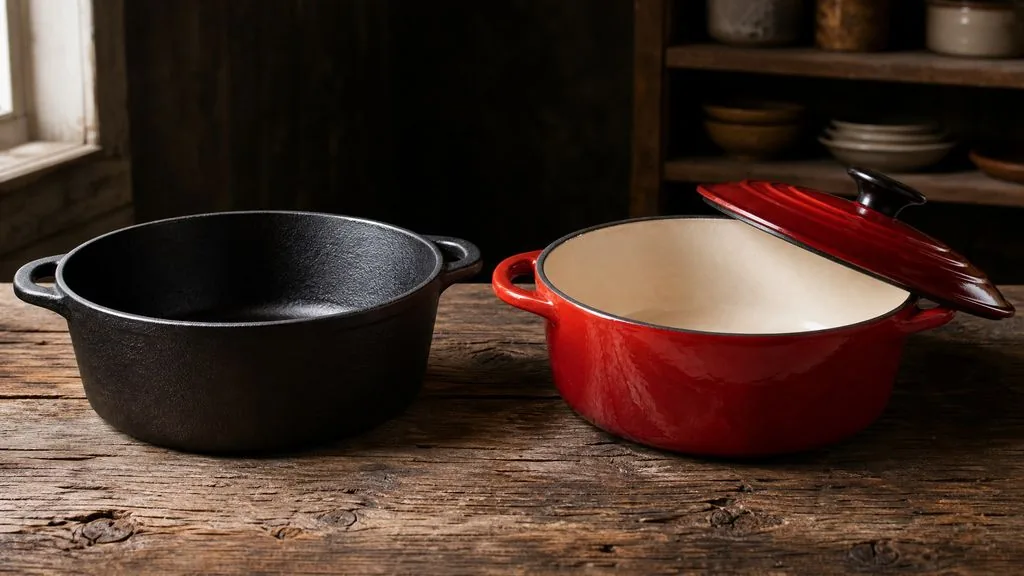
Why mass matters: heat retention
A dutch oven is heavy because mass holds heat. When you preheat a cast-iron pot to 450°F and put cold meat inside, the pot's thermal energy keeps the temperature stable. A thin regular pot cools down immediately when cold food touches it, then reheats unevenly. That's why a dutch oven gives you an even brown all over. A regular pot gives you pale bottoms and burnt edges.
Why the lid matters: steam and moisture
A regular pot lid leaves gaps. Steam escapes. Braising liquid evaporates. A tight dutch-oven lid locks in steam. When you braise, the pot's internal atmosphere gets humid. That humidity transfers heat more evenly than dry air, and it keeps meat moist instead of drying it out. For bread, the sealed pot creates a sauna-like microclimate for the first 20 minutes, which is why you get a crackly crust and good oven spring. A covered regular pot simply does not seal tight enough.
Even heat distribution
Cast iron is an excellent heat conductor. A thick cast-iron bottom distributes flame or oven heat across its entire surface. A thin regular pot has hot spots and cold zones. In braising, hot spots mean burnt edges and undercooked centers. In bread, they mean uneven browning. A dutch oven heats like a blanket—even everywhere.
When a regular pot is actually fine
Boiling pasta: a regular pot works. The water stays hot enough, and boiling is violent enough that a tight lid is not needed. Making soup: a regular pot is fine. Soups do not need the sealed-pot effect. Simmering sauce for an hour: a regular pot works. Boiling eggs, steaming vegetables, making stock: all regular-pot tasks. A dutch oven is overkill for these.
The real cost of buying one
You can braise in a regular oven-safe pot with foil under the lid—the foil seals the moisture. You can bake bread in a cast-iron skillet with a baking sheet as a dome. But if you braise once a week and bake bread weekly, a budget dutch oven pays for itself in two years of not fighting with scorching and drying out. If you never braise or bake, save your money.
Dutch ovens win for braising and bread because of mass, tight lid, and even heat. Regular pots are fine for pasta, soup, and sauce. Buy a dutch oven only if you braise or bake sourdough regularly. Otherwise, it is a budget to premium paperweight.
Frequently asked questions
Can I braise in a regular pot?
You can try, but a regular pot scorches unevenly because it is thin and light. A dutch oven's mass and tight lid prevent that. For a regular pot, use foil under the lid to trap moisture.
Can I bake bread in a regular pot?
Yes, but not as well. A regular pot does not seal steam as tightly. Use a cast-iron skillet with a baking sheet as a dome—the "poor man's dutch oven." Results will be good, not perfect.
Why is a dutch oven so heavy?
Heavy mass holds heat. When you add cold meat to a hot dutch oven, the pot stays hot; a thin pot cools down and reheats unevenly. That is why dutch ovens brown evenly and regular pots have hot spots.
Is the tight lid really that important?
Yes. The tight lid traps steam, which transfers heat more evenly and keeps food moist. A regular pot lid is loose by comparison.
Can I use a dutch oven for everyday cooking?
Yes, but it is overkill for pasta, soup, or sauce. Save it for braising and bread. Regular pots are cheaper, lighter, and perfectly fine for daily cooking.
What if I just want to braise occasionally?
A regular oven-safe pot with foil under the lid works. You do not need a dutch oven unless you braise or bake regularly.